Showing posts with label Databases. Show all posts

Friday, January 16, 2009

Inauguration, News, and Newspapers


You may have been hiding under a rock lately, or you may have been kidnapped by aliens, or maybe you just don't have access to any kind of news or internet sources--wait, then you wouldn't be able to read this--but in case you've not heard the news, the U.S. will be swearing in its first African American president, Barack Obama, on January 20th.

I decided to see what information I could find on inaugural events that are going on.

If you didn't know, the Senate actually puts on a parade and balls for the inauguration. I did a quick Google search and found their website with all the cool events listed...as well as a list of contraband people can't take with them to the actual inaugural speech.

Check it out: http://inaugural.senate.gov/index.cfm

But to give you a little more information about who and what the news is buzzing about for the inauguration, I decided to check out one of the libraries newspaper databases, Proquest Newspaper. This is a large database with both large national and international newspapers as well as local coverage. It seemed like a good way to get a broad look at all the views about the inauguration.

I went over to the library's website and clicked on Article Databases & More to get to an alphabetical list of the library's database. Click on "P" for Proquest got me to the right page where I could select the database I wanted to search.

I did a quick search for 2009 inauguration...

And got 26 articles about my topic from everywhere from England to New York, Washington, North Carolina, and many more. All of them reporting on slightly different opinions and ideas about the inauguration.

Lots of fun reading, and not as time-consuming as a book.

Friday, September 26, 2008

Maybe Bathroom Breaks Are Bad

The last time I talked about bathroom breaks, I ran into a woman with a serious case of OCD. There was also the time a woman was singing "Jesus Loves The Little Children" in the stall next to me, but we won't get into that.

This time it was about child rearing techniques. Who knew such interesting research topics could be found in the ladies room?

In any case, an older woman was talking to a younger woman about ways to prevent poor behavior in children called the "extinction technique." The older woman explained that recognized behavior is repeated behavior, so if bad behavior is ignored and good behavior is recognized and rewarded, then it is the repeated behavior. If bad behavior is ignored, then to a child's mind, it didn't happen.

I'm not certain if I agree with that entirely, but it got me thinking about how this might be researched and applied by educators and others who specialize in child development.

I decided to try the ERIC database through the Marriott Library Article Databases.


This database has what I think is the best resources for education available, so I thought it would be a good place to start. To get there, I went to the library home page, clicked on Article Databases & More, and then on the letter 'E' to get to a list of databases that start with that letter. I scrolled down until I got to the one that said ERIC (Ebsco). There are several places to get information from ERIC because it originally from the U.S. Department of Education, but I like working with the Ebsco database vendor interface best.

Once I was in the database, I searched for "extinction technique."

And there they were, articles about exactly what the women in the bathroom were talking about. They ranged from information about how to help children with potentially dangerous self-destructive behaviors to behavior management information for parents using the extinction technique.

Ah, I do love when a good search comes together and I learn something new!

Friday, August 22, 2008

What's That Line From?

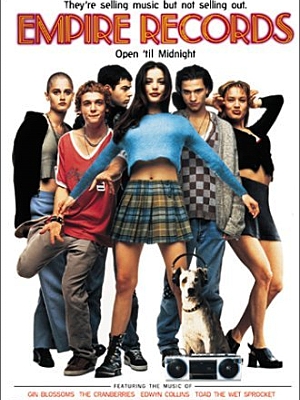
I was watching Lord of the Rings the other day, (I've mentioned I'm a total geek for science fiction and fantasy, right? Okay, then) and I was wondering what was the first movie I ever saw Liv Tyler in.


I think the movie came out in the mid-nineties. I know it was a bit dramatic, and I think she was a goth girl in a record store. Or there was a goth girl in a record store, but Liv was still in the movie.

And I think there was a funeral in the movie for a chick who wasn't dead yet.

Saying it out loud like that makes it sound incredibly weird and lame, but it wasn't a bad movie.

I decided I want to watch it again, just to double check on the lame vs. not-bad front.

And, you guessed it, there's a database for that. It's even freely available on the web. It's called Internet Movie Database.


So I dropped by IMDB and typed in Liv Tyler in ye olde search box.

And found out the movie was called Empire Records. Now, I just have to Netflix it, and I'm all set.

Friday, August 8, 2008

Shaking Off The Vacation

I just got back from a vacation and a week-long conference. Conferences seem to be part and parcel of the professional world. It's where you find out who's doing what research, what advances are being made in a field, and also where serious networking happens.

But it got me thinking...I know which organizations represent my profession, my hobbies, my interests, but does everyone?

Knowing your local, regional, national, international organizations can tell you a lot about your field before you even join the profession. You know what the major issues and concern of that field are, websites to find more information, important people in the field.

It also tells you where and when conferences are. (Hey, it's ALL about the networking! No, really.)

So, how do you know which organizations are important to your field? You guessed it. We have a database for that. If you've been on this blog for more than five minutes, you're shocked, I know.

The database in question? Encyclopedia of Associations.

But here's how you get to that database. Head on over to the Marriott Library homepage and click on Article Databases & More. From there, you want to click on the E under Select Database by Title, and then scroll down the alphabetical list of databases that appears until you can click on Encyclopedia of Associations.

There are a lot of ways to search for associations in the database. By name, by location, by topic or subject. Each entry tells you the kind of organization it is and the contact information for the association.

Good luck with all your future networking!

Monday, July 7, 2008

¡Olé!


This week marks the 2008 Festival of San Fermín in Pamplona, Spain, made world-famous by Ernest Hemingway's description of the running of the bulls in his novel "The Sun Also Rises." Watching news coverage of crazy men getting trampled by stampeding other crazy men (oh, and bulls) always reminds me of my own time as a bullfighter!

[cue the Wayne's World flashback sound effect and wavy image]
At the end of my year-long student exchange in Mexico, I spent a week at a bullfighting ranch where I got to try out my matador skills with a real bull. He was only 3 months old but those little horns caused quite a bruise.
[flash forward to the present]

Anyway, this week's festivities sparked my interest to find other literature that mentions bullfighting. Since I saw my first bullfight in Mexico City, I decided to check out the Latino Literature database to see what it could offer. (If you're not on campus, you'll need to authenticate your browser session by logging into my.utah.edu on the Marriott Library homepage to see this database.) It's filled with fiction, non-fiction, poetry and plays by Latina and Latino writers working in the United States. Because it's a full-text database, I can search for even a single instance of my topic within a work of literature.

My first search for bullfighting was disappointing: only 10 results. But after looking in the Help tab menu, I saw that this database supports both Boolean and truncation searching.

Boolean searching includes using AND (to connect different concepts, such as bullfighting AND Spain), as well as OR (to connect synonyms and related concepts, such as bullfighter OR matador OR toreador).

Truncation searching means that I can search for a root term and get results based on all its variations. The most common way is to end the root term with an asterisk (such as bullfight* which will bring back all results with the words bullfight, bullfighting, bullfighter and bullfighters).

A search in Latino Literature for the truncated bullfight* brings back 69 results (yay!). But a complex search also using the Boolean operator OR -- I searched for matador OR toreador OR bullfight* -- brought back 93 results. ¡Olé! These results include a nice mix between fiction, non-fiction and poetry. The Latino Literature database has recently converted to a new interface but has not yet moved the plays over. A duplicate search in the old database found 21 plays, too.

The best part about learning these two search strategies -- Boolean and truncation -- for the Latino Literature database is they can be used in most every database the Marriott Library subscribes to. ¡Andale pues!

Monday, June 30, 2008

The Play’s The Thing

Anyone who knows me knows I’m a theatre geek. I’ll go see just about anything. It’s not that I’m not discriminating in my choice of what to see, just that I’m willing to give anyone who’s “puttin’ on a show” the benefit of the doubt that it could be good. And when everything connects, it can be a life-altering experience.

But I do pay a price, having to sit through some awful productions when I know someone in the show, or I’m seated next to the director, or I’ve left my bike with the box office staff because there was no place to lock it up outside and I just don’t feel right asking for it back during the intermission for a show I got free tickets to (I wonder why they were free?).

A bad performance is one thing, but a bad audience can also sully an otherwise good show. Late-comers blocking my view, cell phones ringing (and owners answering!), candy wrappers crinkling, private conversations that everyone within 10 feet can hear. You know, people who behave as though they’re sitting in their living room watching a DVD.

“So what,” you ask, “does this have to do with the library?”

Marriott Library has just purchased access to the Theatre in Video* database. So now I (and you) can enjoy a theatre performance and not have to feel guilty if I stop watching halfway through, or worry about inconsiderate audience distractions.

Because this is an online, streaming resource, I can choose when and where I want to watch it (unlike videos from the Multimedia Center, which need to be watched in the library). In addition to plays, it has documentaries and interviews with theatre artists (such as Arthur Miller and Israel Horovitz Discuss Theater). I can create clips of my favorite parts to share with my friends (look for the clip links for Mummenschanz—the toilet paper mimes from Sesame Street, remember?!) And I can see shows from when I was just a kid (check out Meryl Streep in Alice in the Palace, a made-for-TV adaptation of a Joseph Papp-conceived/directed production for the New York Shakespeare Festival, a musical she did between Kramer vs. Kramer and Sophie’s Choice).

Speaking of Shakespeare, Marriott Library has paid extra to provide access to BBC productions of all 37 of the Bard’s plays. And the Theatre in Video database is not yet complete. Alexander Street Press has only uploaded half of the titles they plan to include.

You better start now, if you want to watch them all!

*If you are off campus, you will need to authenticate your browser session by logging in to my.utah.edu first. Theatre in Video is also available from Marriott Library's Article Databases list.

Monday, June 23, 2008

Killing Two Birds with One Stone Statue

Over the weekend, I had a patron come to the Fine Arts reference desk who was doing research on the Temple of Zeus in Olympia, Greece. She was looking for research articles about it and also wanted images to include in a class presentation. I knew just the resource she should use, JSTOR*, because she could do one search and get everything she needs.

JSTOR (short for Journal Storage) is one of the best all-around article databases out there. It offers complete, digitized and searchable back issues of significant research publications in every imaginable discipline, from Art to Physics to Economics to Women’s Studies. So, you can do a search and it’ll bring back results with full-text articles scanned right from the published journals.

Anyway, the JSTOR folks recently added an image-filtering feature to their search box. After you look through the article results, you can click on the Images in JSTOR tab and it highlights the exact pages in articles that have images on your topic. This includes photographs, statistical charts and graphs, scientific diagrams, etc.

In addition, there’s another tab for Images in ARTstor, a database with 500,000 images (and still growing) of art, architecture, clothing, interior design, historical artifacts, posters, videos, maps, and much more. Under this tab you’ll see thumbnail images found by searching for the same topic in ARTstor. When you click on an image, it will open a new window with a larger version that you can download and save. Perfect for PowerPoint presentations.

The student’s search for “Temple of Zeus” and Olympia was very successful in finding articles and images. Mileage may vary. You may need to change your search terms just a bit to get more images from ARTstor.

* As always, if you're a member of the University of Utah community, you can gain access to both the JSTOR and the ARTstor databases through the Article Databases list, linked from the Marriott Library homepage.

Friday, June 13, 2008

How Bathroom Breaks Can Inspire Me

So, I left my office this morning to take a trip to the restroom. When I got there, I noticed a young woman washing her hands. This might seem rather innocuous, but what intrigued me about this woman was that she stared at her hands in the mirror while washing them. She also lathered them in a very precise, almost ritualistic manner. It was a little disturbing, I have to admit.

When I returned to my office, I mentioned the incident to my colleagues, and they insisted that this was worthy of a blog post. The woman was clearly OCD, they said.

Since our mission on this blog is to teach you about places to get information, I thought I would mention a few databases you could search to find out about mental disorders.

The first place I looked was a database open to anyone called PubMed. It's a public medical database sponsored by the US National Library of Medicine. I wanted to find out more about what causes a mental disorder and how it's diagnosed by medical professionals, so this seemed a good place to begin my search for information. I typed "Obsessive Compulsive Disorder hand washing" into the search box and retrieved over eighteen articles on my topic. The first one talked about how to treat OCD hand washing. It turns out the woman in the bathroom may have had a fairly common disorder.

So, in this database, I learned about diagnosis and treatment, but what about the causes of mental disorders? I still needed to find out about that part of my original question. I thought the best place to look would be a database that specialized in psychology.

To learn more, I went to the Marriott Library's databses and selected a database called PsychArticles, which the library subscribes to through the vendor EbscoHost. In this database, I simply searched for "obsessive compulsive disorder" and found over one hundred psychology articles on the mental illness. The results also included information about diagnosis and treatment, but also case studies on the various ways in which a variety of mental illnesses present themselves.

Thursday, June 5, 2008

The Visual Thesaurus: How To Get the Most Enjoyment out of Your Dirty Words

Ever find yourself looking for a synonym for "the f word," but you just don't know where to go?

a: Go to the library! Well, more specifically, go to the library's online databases.

The Marriott Library subscribes to 300 or so databases. And while I have many favorites, the Visual Thesaurus makes my oh-so-exclusive top ten. Like a regular print thesaurus, the Visual Thesaurus gives you a "classified list of synonyms"--a definition that I ripped off directly from the Visual Thesaurus. But in addition to that, it also provides definitions and word maps (see below) that show how those synonyms interact with other related words. The most amusing feature, however, is the audio pronunciation. Just imagine: an emotionless computerized voice repeating curse words to your wicked, little heart's content.

inappropriate

Tuesday, June 3, 2008

Database -Literature Resource Center

Now don't get me wrong about finding junk on the web. It can be a quick way to prove your point or even win a bet (like: When was "Frankenstein" written -(psst! 1818 by Mary Shelley -Wikipedia)). But when you need to have something other than semi-reliable and semi-anonymous stuff about an author, our database "Literature Resource Center" (note: you'll have to scroll down to find it) is muy excellente.

You can find creditable information like biography (ex. born, wrote a few things, took amazing drugs, then died), a complete list of works, criticism (great for term papers) and a little bit more.

Need more info? Ask a librarian!